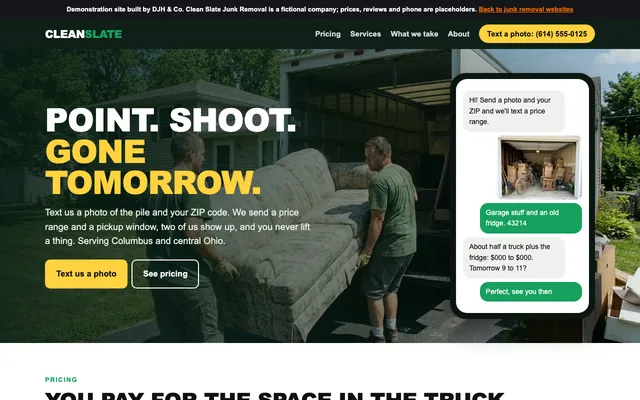
We build websites one industry at a time, because the words a plumber gets found with are not the words a home inspector or a public adjuster gets found with. Pick yours below to see what changes, and click through a full example site.
Every service gets the same proven system, tuned to the way your customers actually search.
The same system works for any business that gets customers from Google. Each industry has a page that explains it and a full example site you can click through.
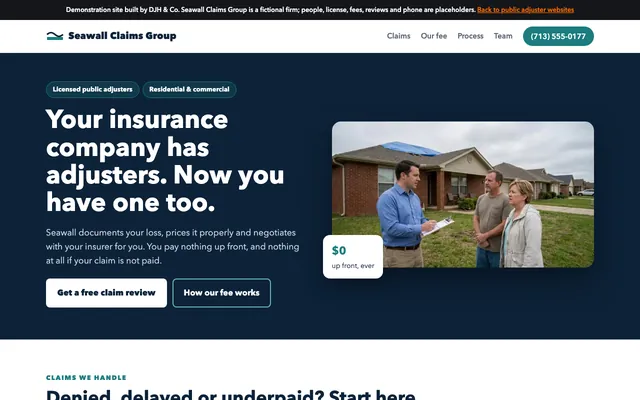
Win the homeowner searching after a storm or a denied claim.
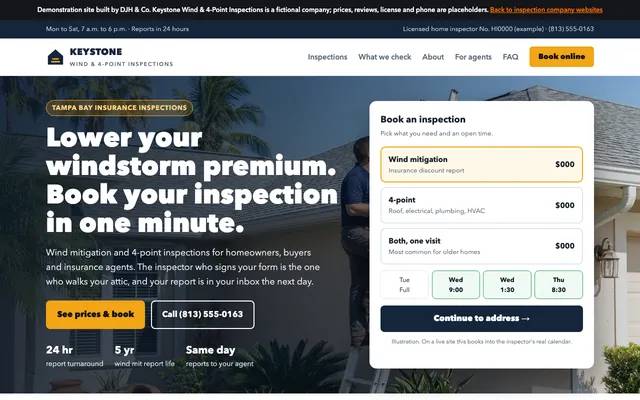
Book insurance inspections online, reports sent to the agent.
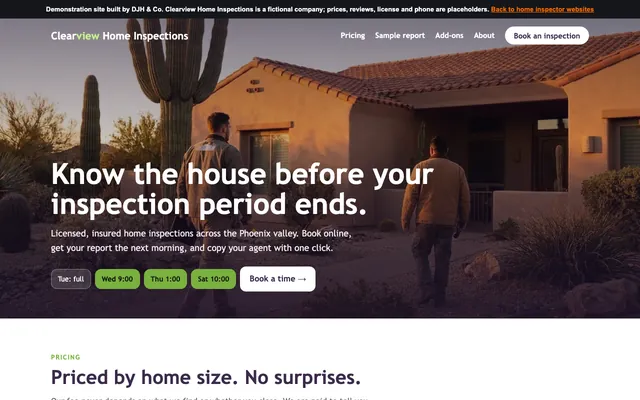
Get picked by buyers racing an inspection deadline.
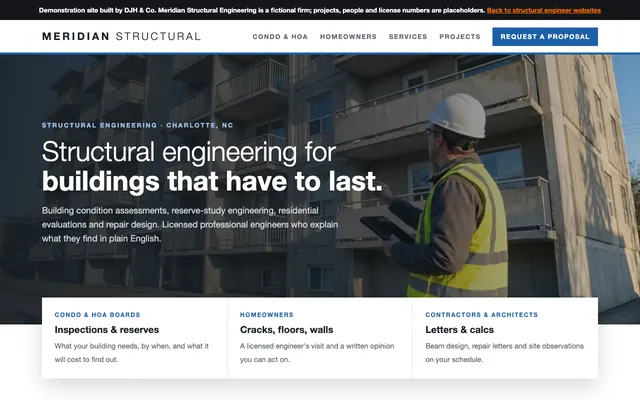
Reach condo boards, homeowners and builders who search.

Be the expert attorneys and owners find first.
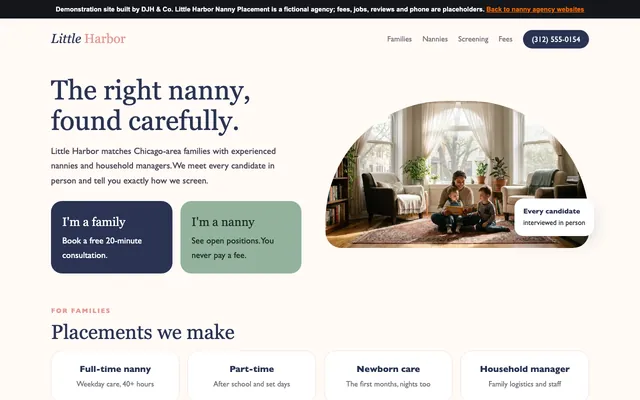
One site, two front doors: families and nannies.
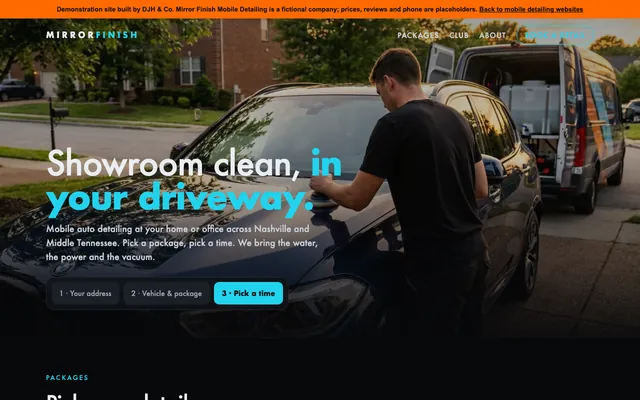
Packages, prices and booking by address.
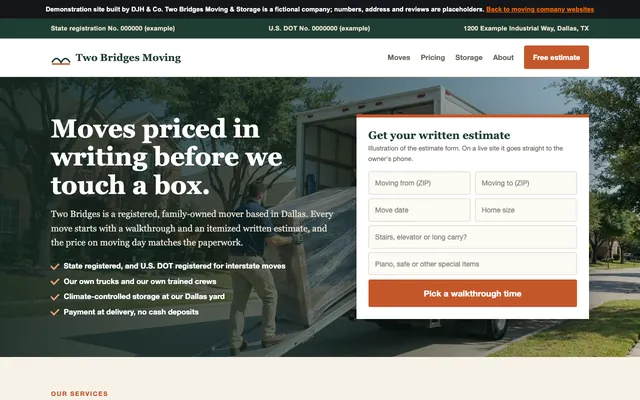
Look legitimate, collect estimate requests.
We build the same website and lead system for every one of these. The orange ones have a full example site; the rest use the same design, built around your business.
Don't see yours? If you get customers from Google, we build for you. A sample of who we work with:
A trade page is half of what it takes to get found. The other half is the place.
Almost nobody searches for a plumber. They search for a plumber in the place they are standing, and Google answers with the businesses that look like they do that job in that area. So the pages above tell Google what you do, and the pages below tell it where you do it. A site needs both, and it needs them on separate pages rather than one long list that mentions everything once.
Each city page is written for its own market: the neighborhoods people actually name, the county office that issues the licenses, and the trades that stay busy there for local reasons. Pick the one you work in.
The question underneath all of this is whether a contractor who does six different things needs six pages. Google does not publish a rule about that, and anybody who tells you it does is guessing. What Google Search Central actually says is to “Think about the words that a user might search for to find a piece of your content,” and that someone who knows a topic well “might use different keywords in their search queries than someone who is new to the topic.” That is the test worth building for. A Sarasota homeowner types pool cage rescreen, the neighbor types lanai screen replacement, and the property manager down the street types screen repair contractor. Three sets of words, one job, and a single page that mentions screens once in a list is not a close match for any of them. Splitting the work onto its own pages is the part of contractor website design that does the matching, and it is why the links on this page say what each page is about rather than saying click here. Google’s wording on that: “With appropriate anchor text, users and search engines can easily understand what your linked pages contain before they visit.” Both quotes are from the Google Search Central SEO Starter Guide, so you can check them yourself.
Those seven are the markets we know street by street, because this is where we live and work. The offer itself is open to contractors anywhere in the United States and the build works the same in any market, so if your town is not on that list it is not a problem. Say where you work on the call. All seven, side by side: Locations we serve →
Both of these come up before a build starts, and both have a real answer in Florida law rather than an opinion.
Theirs, and it is worth settling before anything gets built. In Florida a contractor license is held by a person, not by a company. Statute 489.105(4) defines a primary qualifying agent as “a person who possesses the requisite skill, knowledge, and experience, and has the responsibility, to supervise, direct, manage, and control the contracting activities of the business organization with which he or she is connected,” and 489.119(2) says that if you want to contract as a business organization, “the applicant must apply for registration or certification as the qualifying agent of the business organization.”
So when the license is somebody else’s, the licensed contracting business is theirs, and the business name on the site, the license number on it and the Google Business Profile all have to describe that one business. A site with your company name across the top and their number in the footer is describing two different businesses, and that is a question for DBPR and your own attorney before it is a question for a web designer. We are neither one. What we need on the call is the plain version: who holds the license, what name goes on the contract, and whether your own license is in progress. If it is, say so, because the business name and the Google listing are a lot easier to set up once than to rename later.
If you hold a Florida registration or certification, yes. Statute 489.119(5)(b) reads: “The registration or certification number of each contractor shall appear in each offer of services, business proposal, bid, contract, or advertisement, regardless of medium, as defined by board rule, used by that contractor or business organization in the practice of contracting.” Regardless of medium is the part that matters here. A website is an advertisement, and so is the Facebook page. That is why the number goes in the footer, where it sits on every page, and on the quote and contact pages, where an offer of services actually happens. If you are not certain how your number reads, look it up on DBPR’s license search and use what the record says rather than the version you have been writing by hand.
Several of the trades on this page the state does not license at all, and Florida took the local licenses away from a long list of them in 2021, with the last of those expiring in July 2023. We wrote that change up in full here. If you have no number to show, that is not a problem, but it does change how the page gets built: the trust on a handyman website or a pressure washing website then has to be carried by real photos of your own jobs, your reviews and your insurance instead.
Sources for the quotes above, so you can check them yourself: Florida Statutes 489.105 and 489.119, via the Florida Senate. Nothing on this page is legal advice.
Same system, same $297/month, whatever you do. If your customers find you on Google, we can get you found and get you booked.